Key Takeaways
- Demand for traditional SEO tactics (set-and-forget keyword strategies, backlink campaigns) is declining, but demand for holistic search optimization, including GEO, is at an all-time high.
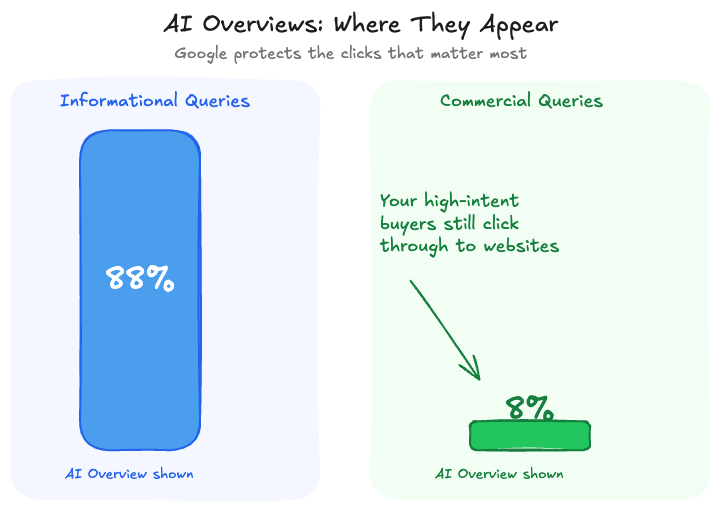
- AI Overviews appear on 88% of informational queries but only 8% of commercial queries, meaning Google is protecting the clicks that matter most to businesses.
- Link building, elite technical performance, and programmatic SEO based on public data are the specific practices losing relevance.
- SEO’s future is less about gaming rankings and more about product marketing, positioning, and showing up authentically wherever people search.
The Recurring “SEO Is Dead” Narrative
Every five years or so, someone writes SEO’s obituary. In 2009, it was the death of black hat tactics. In 2014, social media was supposed to replace Google entirely. In 2019, voice search was going to eliminate clicks. Now, in 2026, AI is the culprit.
The prediction is always the same: a new technology will change how people search, clicks will evaporate, and the entire discipline of search engine optimization will become irrelevant.
It hasn’t happened yet. But this time feels different to a lot of people, and there are real reasons for that. AI is genuinely reshaping how consumers find information and make purchasing decisions. The question isn’t whether things are changing. They are. The question is whether “change” means “dead.”
At Flywheel Digital, we’re a growth marketing agency that has built SEO programs for brands across consumer, education, and digital products for nearly a decade. We were a 2x finalist for SEO Boutique Agency of the Year at Search Engine Land. Here’s what we’re seeing from the inside.
The Real State of SEO Demand in 2026
Here’s the paradox. Demand for what most people think of as “traditional SEO” is genuinely declining. The playbook of setting a one-time keyword strategy, cranking out blog content, and building backlinks has lost its pull with marketing leaders. People are questioning whether those tactics will stay relevant, and that skepticism is not entirely wrong.
At the same time, demand for holistic search optimization is the highest I’ve ever seen.
Traditional SEO Demand vs. GEO Demand
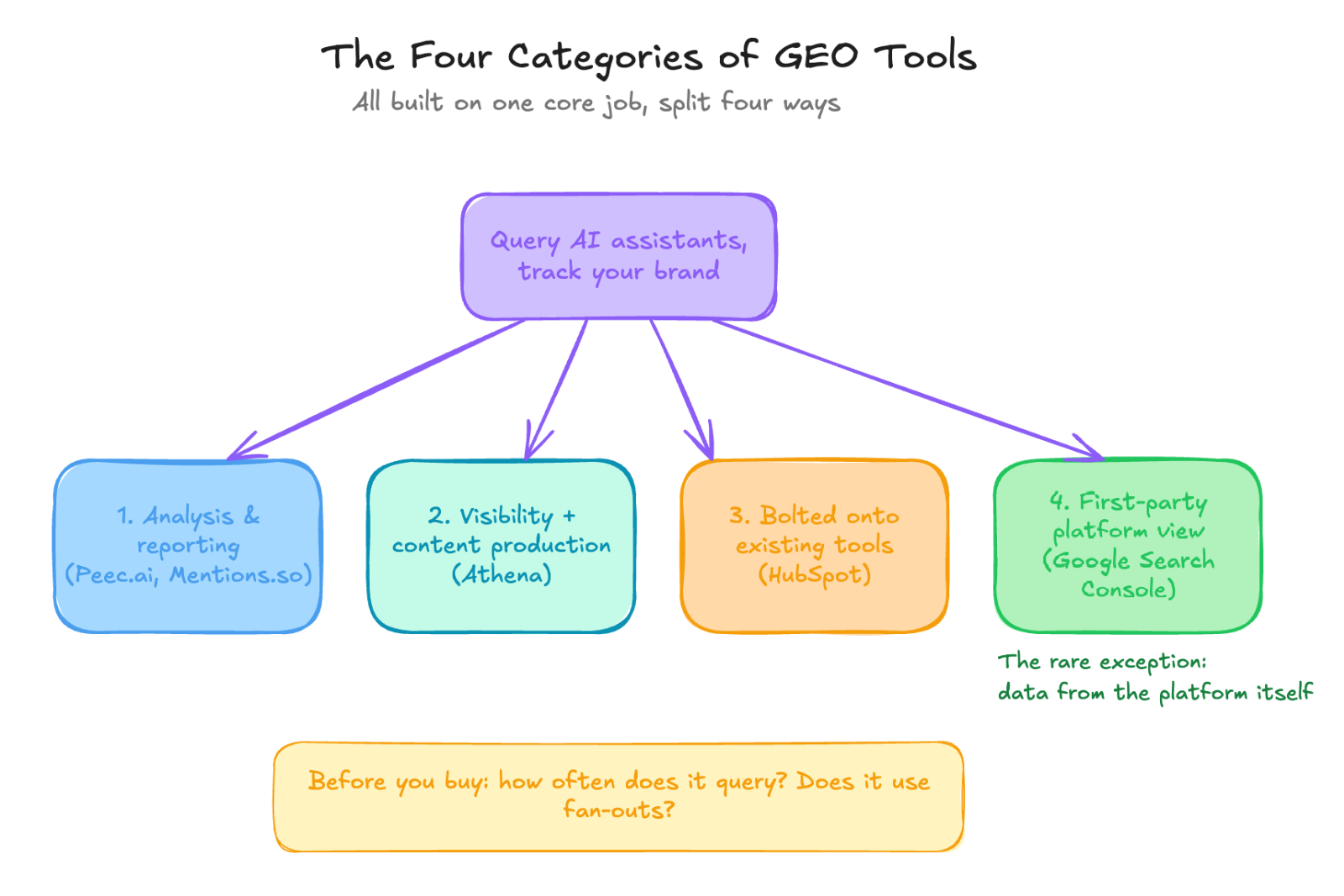
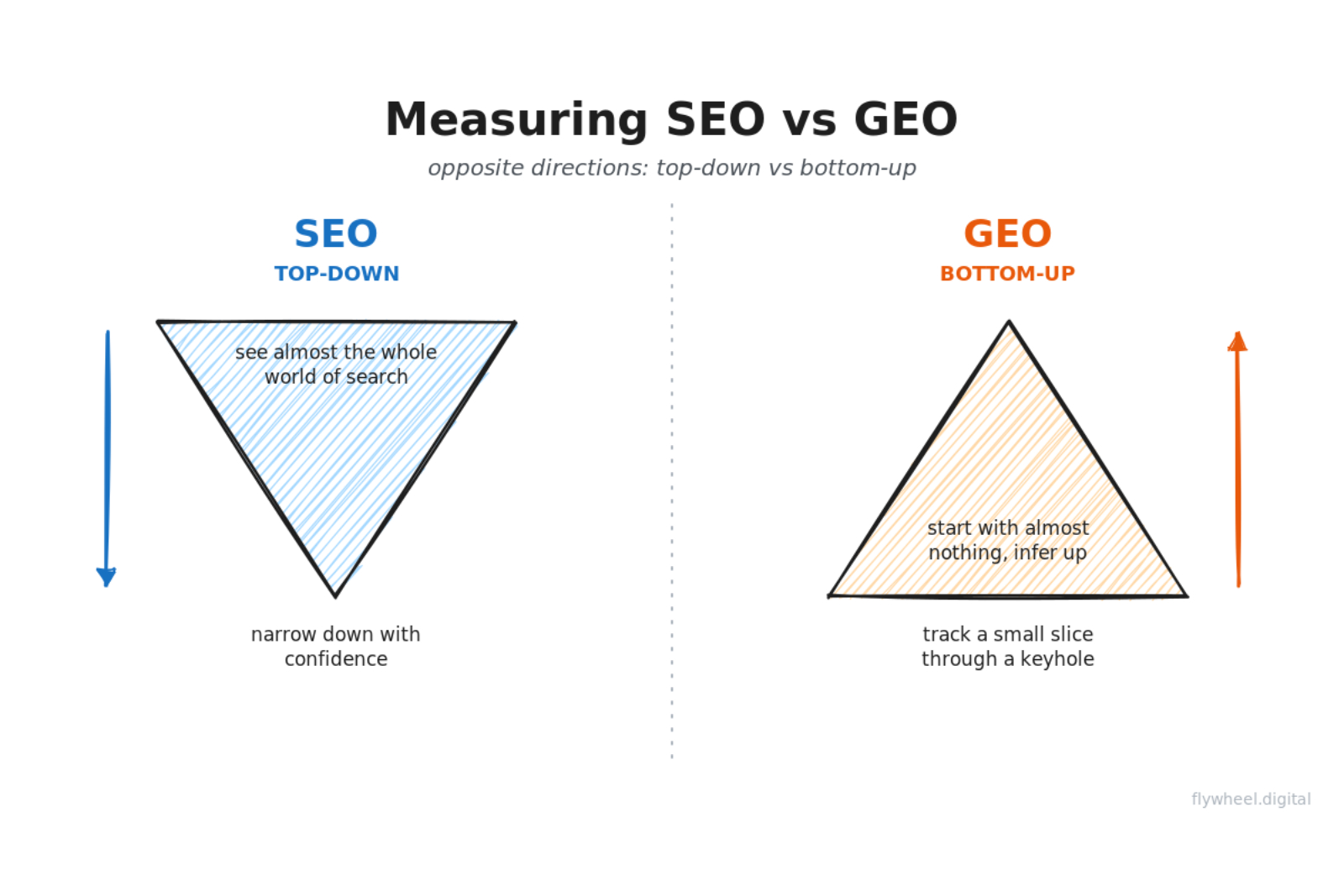
The difference comes down to scope. When you expand the definition of SEO to include generative engine optimization (GEO), AI answer optimization, social search, and LLM visibility, the appetite from marketing leaders has exploded. Executives at every level are saying the same thing: we need to do something about this.
What’s unique about this moment is the demand isn’t just for services. It’s for knowledge. Marketing directors and founders used to have a reasonable handle on how SEO worked. Now they’re trying to understand a field that’s changing by the quarter. Questions like “how do I get mentioned in ChatGPT?” and “what’s actually driving LLM citations?” are showing up in nearly every sales conversation we have.
The old playbook of traditional SEO tactics has a shrinking audience. But the universe of search optimization, which now includes showing up in AI tools, YouTube, Reddit, and social platforms, is larger than it’s ever been. The shape of the demand has changed completely, even though the total volume of it has grown.
Two Client Stories That Illustrate the Shift
To make this concrete, here are two anonymized examples from Flywheel’s client portfolio that show how different types of businesses are responding to this shift. You can explore more examples on our client growth stories page.
The Market Leader Protecting Its Flanks
One of my clients is a large consumer brand, the clear leader in its product category. They’re omnichannel, not primarily DTC, and they’re essentially everywhere on the internet. For years, they treated organic search as a low-urgency channel. Their reasoning was straightforward: they already had massive brand recognition, people were Googling them regardless, and category-level organic traffic was a nice-to-have, not a priority.
That changed when GEO entered the picture. Suddenly, showing up in LLM responses became an institutional priority because leadership recognized it as a brand land grab. Their feeling was clear: we are the brand leader, and this represents an opportunity for a competitor to overtake us. They didn’t want to be early adopters because it was trendy. They wanted to be early because losing ground in LLM visibility felt existential.
The Education Brand Chasing a 12% Conversion Rate
Another client is a Canadian education business focused on lead generation. Their students need information urgently, and the enrollment process typically begins with a conversation with admissions.
What they discovered stunned their leadership team. Their typical SEO conversion rate, leads coming in from organic search, sat around 2%. Standard for the industry. But when prospective students found them through an LLM mention and then visited the website, the conversion rate jumped to 12%. Six times higher.
The marketing director responded by pushing for equal investment in SEO and GEO. The CEO, if they were being candid, would probably say they don’t care about traditional SEO at all anymore. That 12% conversion rate is the only number that matters to them.
These two brands sit in completely different markets with different funnel structures, but they’ve arrived at the same conclusion: GEO is a business-level priority, not just a marketing tactic.
What AI Overviews Are Actually Doing to Clicks
One of the most common concerns driving the “SEO is dead” narrative is Google’s AI Overviews (AIOs), the AI-generated summaries that appear at the top of search results. The headline version of this story is that Google is “stealing” clicks by answering questions directly. But the data tells a more nuanced story.
AI Overviews trigger on approximately 88% of informational queries. Think classic lookups like “Brad Pitt age” or “what is compound interest.” For these types of searches, Google is using AI to provide direct answers instead of sending users to a third-party website.
But AI Overviews only appear on roughly 8% of commercial queries. When someone searches “best running shoes for flat feet” or “where to buy organic skincare,” Google is still serving traditional results with clickable links.
Google has been very deliberate about this distinction. They’re answering informational questions with AI, but they’re protecting commercial intent by keeping the traditional search experience intact. This matters enormously for SEO strategy.
The vast majority of SEO-driven revenue has always come from commercial and transactional searches, not informational blog posts. If your SEO strategy was built entirely on ranking for informational content, that strategy is under real pressure. If it was built on capturing high-intent searches tied to the path to purchase, your runway is much longer than the headlines suggest.
For 80% of companies, SEO is now a mid-funnel and bottom-funnel play. Content directly tied to the purchase decision can still win rankings and conversions. But writing generic “Benefits of Vitamin C for your skin” blog posts to attract top-of-funnel traffic? That era is closing.
What’s Actually Dying in SEO
Not everything survives this transition. There are specific practices that are losing their correlation with success, and it’s worth being honest about what they are.
Link Building Is Losing Its Edge
Backlinks have been the backbone of SEO for two decades. More backlinks from authoritative sites has historically equaled better rankings. That correlation still holds for traditional Google rankings, but there’s no strong evidence yet that backlinks meaningfully influence LLM citations.
LLMs appear to take a more nuanced approach to determining authority than Google’s PageRank-derived algorithm. And with AI Overviews, there’s growing sentiment that backlinks may be mattering less even within Google’s own ecosystem.
I still see backlinks working for organic rankings today. But the uncertainty about their future relevance is making marketing leaders more hesitant to invest in link building campaigns, and I think that hesitation is probably well-placed.
Elite Technical Performance Matters Less
Your website needs to load properly. It needs to pass Google’s core web vitals. But there’s no evidence that pushing your PageSpeed score from 85 to 99 is going to influence whether ChatGPT mentions your brand.
The threshold for technical SEO performance has become more binary: your site either works well enough or it doesn’t. If your site loads cleanly on a 3G mobile connection, you probably don’t need to prioritize speed further. Focus instead on individual page experience, the helpfulness framework Google has published, and ensuring your content actually answers what people are looking for. The marginal returns from extreme technical optimization are shrinking fast.
Programmatic SEO Based on Public Data Is Disappearing
A lot of websites built their organic traffic on what we’d call data aggregation SEO: massive directories of publicly available information. Think area codes, cat breeds, zip code lookups. These pages were powered by public datasets on the backend and generated enormous amounts of organic traffic.
AI tools can now aggregate that information instantly, eliminating the need for a third-party website to organize it. If your programmatic SEO strategy is built on publicly crawlable data, the foundation is crumbling. Brands aren’t adding any value by simply organizing information that a chatbot can now assemble in seconds.
The exception is proprietary data. If you have your own unique dataset, like a parenting app with proprietary event listings for every city in America, programmatic approaches can still work because the data itself is your competitive advantage. But generic data aggregation? That’s going away.
Why SEO Predictions Keep Missing the Mark
The pattern is remarkably consistent. A new technology appears, predictions emerge that search behavior will shift to a new modality, and industry observers announce that clicks are about to disappear.
In 2009, it was the end of black hat tactics. In 2014, social media. In 2019, voice search. In 2024, AI.
Two common assumptions underpin every one of these predictions. First, that search behavior will migrate wholesale to the new modality. Second, that the shift will eliminate clicks entirely.
Neither has ever fully materialized, and for a fundamental reason: the number of people looking for answers and products online has never decreased. If anything, each new technology has expanded the total search market. The rise of TikTok didn’t kill Meta. Voice search didn’t kill Google. And AI, so far, appears to be adding to the total volume of searches, not replacing them. According to Semrush, Google search grew by over 21% in 2024, even as AI tools were gaining users rapidly.
There are still plenty of queries where having a few options and clicking through to a website is the best user experience. Those clicks may become fewer, but they’ll also carry higher intent. And only about 30% of ChatGPT prompts even resemble traditional search queries. The rest are conversations, brainstorming, and writing tasks that never competed with Google in the first place.
The only thing that would truly damage SEO at a structural level would be a massive economic recession that causes people to search for less stuff. As long as people are searching, whether through Google, ChatGPT, voice, or social, there will be businesses that want to show up for those searches. And someone needs to help them do it.
Where SEO Is Headed: From Growth Function to Product Marketing
Here’s a prediction that most SEO professionals would disagree with: the discipline is moving from being primarily a growth marketing function to being primarily a product marketing function.
For the past decade, SEO has lived inside growth teams, reporting up through revenue marketing or inbound lead generation. The job was to capture demand and convert it. That function isn’t going away, but it’s getting smaller as a share of what SEO professionals actually do.
What’s growing is the market research and positioning side of the work. The best use of an SEO team in 2026 involves examining your positioning, making sure that positioning is properly expressed across every surface where people search, analyzing how you compare to competitors, and identifying where you should be showing up but aren’t.
It’s always been getting harder to insert your business where it doesn’t naturally fit. AI is accelerating that trend. Generative engine optimization is essentially asking: does your brand deserve to be the answer? That’s a positioning question, not a technical SEO question.
The businesses that win in search over the next two to three years will be the ones with clear positioning, differentiated expertise, and authentic relevance to the queries they target. SEO isn’t dying. But it is growing up.
For bi-weekly growth marketing insights on how search is evolving, subscribe to Signals, Flywheel’s newsletter for digital-first brands.
Frequently Asked Questions
Is SEO worth investing in for 2026?
Yes, but the investment should look different than it did three years ago. Pure content-and-backlinks programs are losing effectiveness. The best SEO investments in 2026 focus on commercial and transactional content, LLM visibility, and ensuring your brand positioning is clearly expressed across every search surface, including AI tools.
What’s the difference between SEO and GEO?
GEO, or generative engine optimization, refers specifically to optimizing your brand’s visibility in AI-generated responses from tools like ChatGPT, Perplexity, and Google’s AI Overviews. At Flywheel, we consider GEO a subset of SEO, not a replacement. SEO is about showing up wherever people search. GEO is one important pillar of that broader strategy.
Will AI completely replace Google search?
The data doesn’t support that prediction. AI tools are excellent for informational queries, but consumers still rely on traditional search for commercial decisions that involve comparing options, checking reviews, and visiting websites. The two modalities are more complementary than competitive, similar to how TikTok grew alongside Meta rather than replacing it.
How do AI Overviews affect my website traffic?
AI Overviews are reducing clicks for informational queries (appearing on roughly 88% of them) but have minimal impact on commercial queries (appearing on only about 8%). If your traffic was heavily dependent on informational content, expect declines. If your strategy targets purchase-intent keywords, the impact is much smaller.
What SEO tactics still work in 2026?
Creating specific, expert-driven content tied to commercial intent still works. Building a strong brand presence across multiple platforms, including your website, YouTube, LinkedIn, and Reddit, still works. Ensuring your positioning is clearly expressed so both search engines and AI tools recognize your authority is the highest-leverage tactic going forward. What’s fading is generic informational content, mass link building, and trying to show up for queries where your brand doesn’t naturally belong.
If your team is moving away from traditional keyword tactics toward holistic search optimization, the senior strategists at Flywheel Digital can help you navigate GEO and AI Overviews. They embed directly into your team to build data-driven growth channels without the typical agency fluff.